How much does an
e-commerce website cost?
The honest answer most agencies won't give you: it depends — but the ranges are predictable once you know what drives the price.
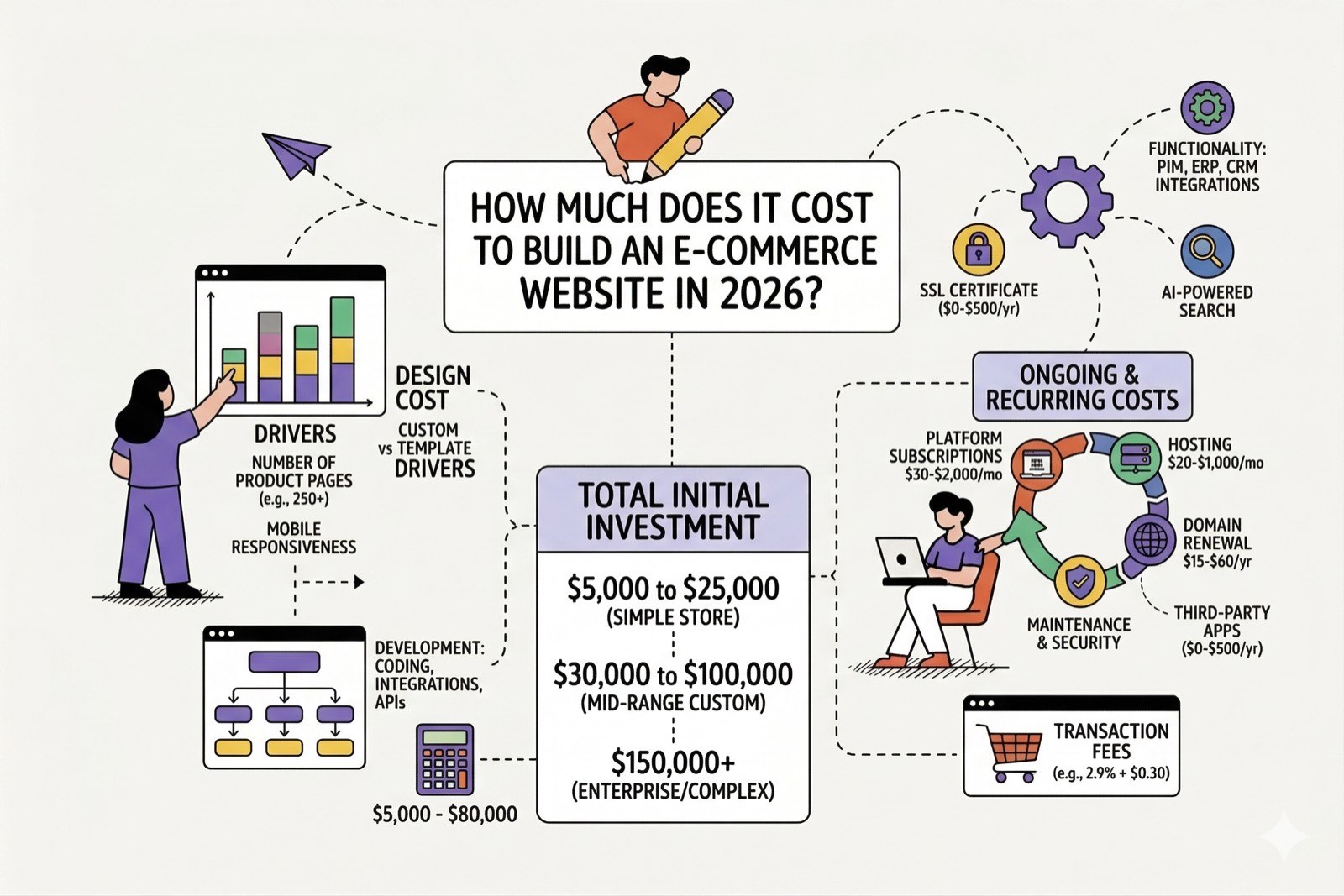
In 2026, an e-commerce website can cost anywhere from $0 to $50,000+. The difference comes down to three things: how custom the design is, how many products and integrations you need, and whether you maintain it yourself or hire a partner.
Here's a clear breakdown of the three pricing tiers small business owners actually choose between in 2026.

Tier 1: DIY builders ($0–$500/year)
Wix, Square Online, and Shopify Starter let you launch a basic store with no design help. You pick a template, plug in your products, and you're live in a weekend.
This tier works for hobby sellers, makers testing demand, or anyone who needs a transactional page rather than a real brand experience. Expect transaction fees, limited design control, and slow loading templates.

Tier 2: Hosted platforms ($2,000–$10,000)
This is where most real small businesses land. Shopify, BigCommerce, and Squarespace Commerce give you a polished store with a customized theme, real branding, payment processing, and the apps you need for shipping, taxes, and email.
Budget roughly $2,000 to $10,000 in year one if you hire a designer to set it up properly. Ongoing platform fees run $30 to $400 per month depending on the apps you add.

Tier 3: Custom builds ($10,000–$50,000+)
A custom build is for stores that need bespoke design, deep integrations with inventory or ERP systems, large catalogs, or a brand experience that can't be done with a template.
Pricing varies wildly here — a clean custom Shopify Plus build runs $10K to $25K, while a fully headless commerce build with custom checkout and integrations can pass $50K. The upside: faster pages, better SEO, and no app sprawl.
What's included (and what's extra)
The sticker price almost never matches the real first-year spend. Here's what to plan for.

Usually included

Almost always extra
- Josh Woods

The Woods Made Designs Difference
At Woods Made Designs, we give you transparent, fixed-scope e-commerce pricing — no surprise add-ons, no padded retainers. We'll help you choose the right tier for your stage and build a store that can grow without a rebuild.
Want a real number for your project? Hop on a quick consultation call — it's free, and you'll leave with a clear budget instead of a guess.