Shopify, WooCommerce
or custom build?
Picking the wrong e-commerce platform is one of the most expensive mistakes a small business can make. Once your store is live, switching means rebuilding from scratch.
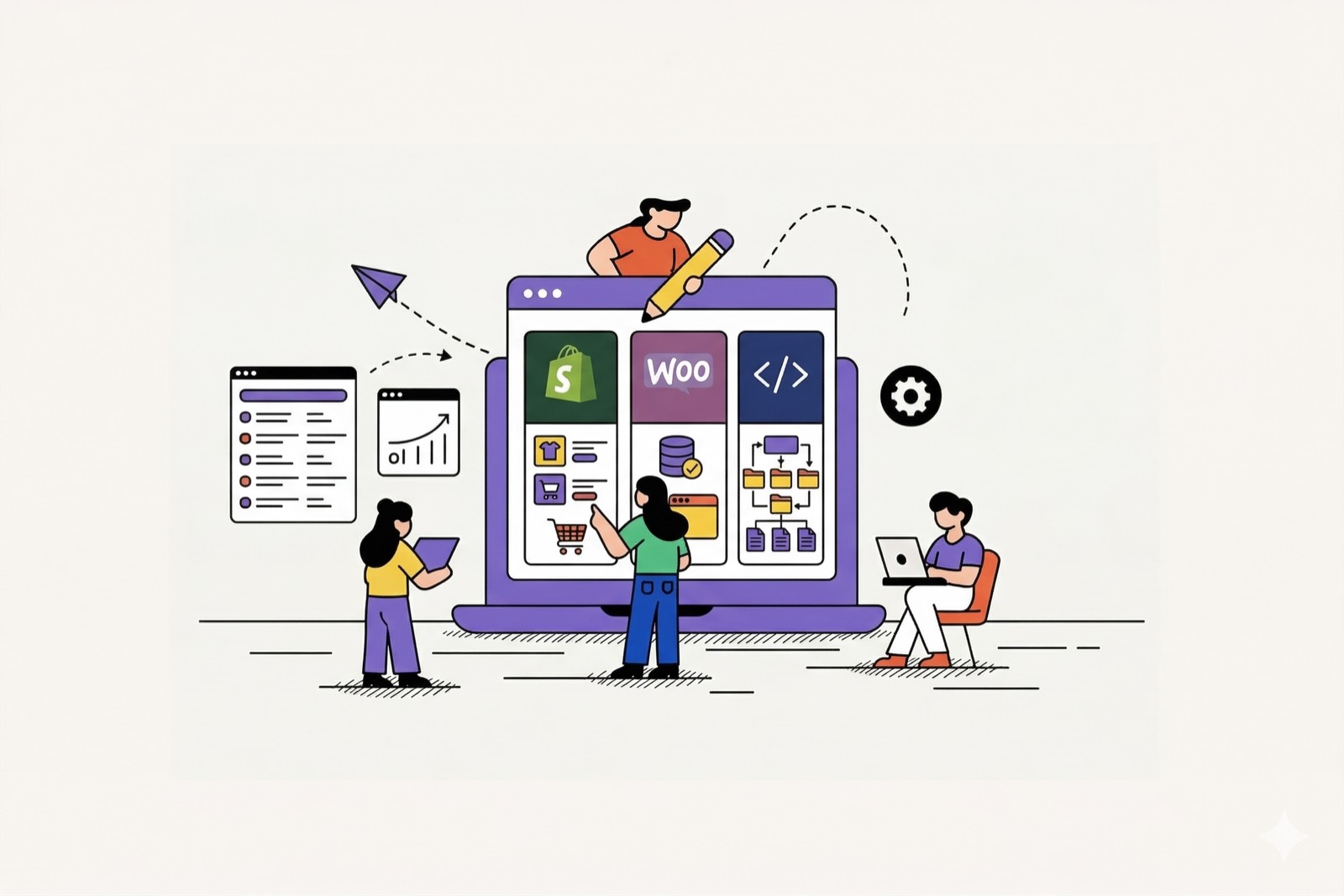
Shopify, WooCommerce, and custom builds all sell things online — but they're built for very different kinds of businesses. The right choice depends on your team, your catalog, and how much control you actually need.
Here's a no-fluff comparison so you can pick the right one the first time.

Shopify — the safe default
Shopify is the easiest way to launch a real store. Hosting, security, payments, and updates are all handled for you. The app store covers almost any feature you could want, and support is genuinely good.
The trade-off: you'll pay $39 to $399 per month plus app subscriptions and transaction fees, and you're working within Shopify's rails. Best for: most small businesses launching in 2026.

WooCommerce — the open option
WooCommerce is a free plugin that turns WordPress into a full e-commerce store. You own everything, you can customize freely, and there are no platform fees taking a cut of your sales.
The catch: you're responsible for hosting, security patches, plugin updates, and backups. When something breaks at midnight, you fix it. Best for: content-driven brands already on WordPress that want full ownership.

Custom build — total control
A custom e-commerce build means starting from a clean slate. The result is faster pages, no app sprawl, no template limitations, and a checkout that does exactly what you need.
It's also the most expensive option up front and requires a developer (or partner) to maintain. Best for: stores with unique catalogs, deep integrations, or brand experiences that templates can't deliver.
Side-by-side at a glance
Where each platform wins — and where it falls short.

Pick Shopify if you

Skip Shopify if you
- Josh Woods

The Woods Made Designs Difference
At Woods Made Designs, we build on all three platforms — Shopify, WooCommerce, and fully custom — and we'll honestly tell you which one fits your business instead of pushing you toward whichever pays us the most.
Want a straight answer for your store? Hop on a free consultation and we'll walk through your catalog, your team, and your goals together.