What is a
lead funnel?
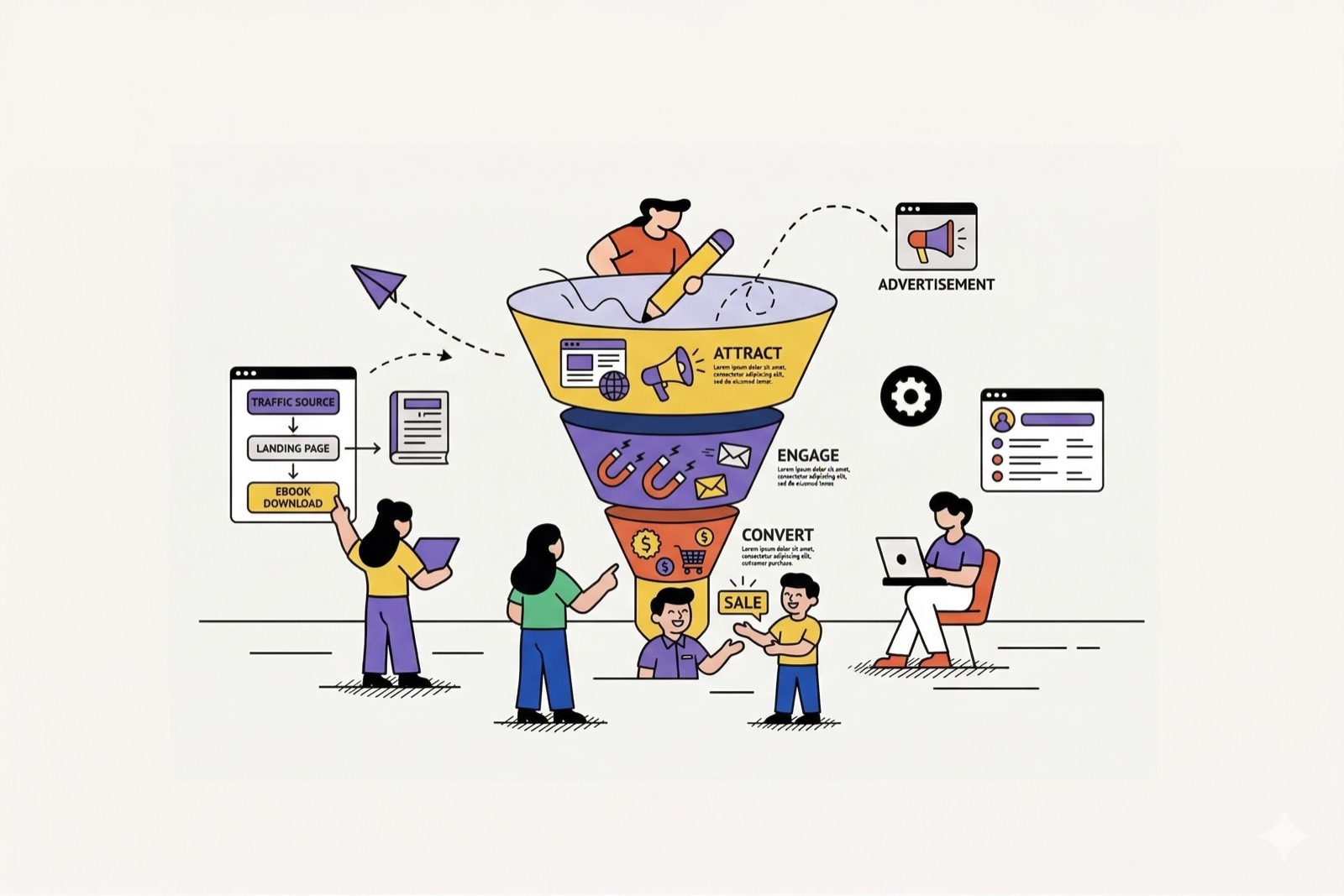
A lead funnel is the path a stranger takes to becoming a paying customer. That's it — no jargon, no complicated math.
If you've ever signed up for a free guide and then started getting helpful emails from that company, you walked through a lead funnel. The goal of every funnel is to turn cold attention into warm interest — and then warm interest into a real conversation.
Here's how lead funnels actually work, broken into the three stages every small business should understand.

Stage 1: Attract
The top of the funnel is about getting noticed by the right people. This usually happens through social media posts, paid ads, blog content, SEO, or word of mouth.
The goal isn't to sell anything yet. The goal is to grab attention from people who might actually need what you offer — and pull them out of the noise of everyday scrolling.

Stage 2: Capture
Once you have someone's attention, you need a way to stay in touch. That's the middle of the funnel — capturing their email or phone number in exchange for something genuinely useful.
That "something useful" is called a lead magnet: a free guide, a checklist, a discount code, a quick assessment, a sample. The trade is simple — value for contact info.

Stage 3: Convert
Now you have a real lead in your world. The bottom of the funnel is where you turn that lead into a customer — through a follow-up email sequence, a sales call, a personalized offer, or a retargeting campaign.
Most leads won't buy on day one. The follow-up is what separates funnels that actually make money from funnels that just collect emails into the void.
Lead funnel vs sales funnel
People mix these up all the time. They're related, but they're not the same thing.

A lead funnel

A sales funnel
- Josh Woods

The Woods Made Designs Difference
At Woods Made Designs, we build lead funnels that feel less like marketing and more like actual help. From the landing page to the email sequence, every piece is designed to earn trust before it asks for the sale.
If you want a funnel that brings in real leads instead of just inflating an email list, hop on a quick consultation — it's free.